
Call us toll free: (317)727-9173
Top notch Multipurpose WordPress Theme!

How to Choose Supplements Like an Expert (SuppCo Podcast)

by NaturPro in Uncategorized Comments: 0

Posted by Supp.Co, April 22, 2026 — The supplement industry has a quality problem. Not a shortage of it. A definition problem. Every brand claims it. Almost none of them mean the same thing.

(Read the full article here.)


“Quality is like an onion with a thousand layers. By the time you get to the core, you’ve shed a few tears, because you’ve seen how things really work.”


I sat down with Blake Ebersole to talk about what quality actually means when you strip away the marketing. Blake has spent more than two decades on the back end of this industry: reviewing labels, qualifying ingredient suppliers, auditing manufacturers, and building the kind of specifications that most brands don’t know exist. What he described is a system so layered and so poorly understood by most people operating inside it that the word “quality” has become almost meaningless.

Here’s what I took away.

Quality Is a Checklist… a Very Long One

Blake doesn’t think in abstractions. He thinks in checkboxes.

Good Manufacturing Practices alone carry roughly 300 checkboxes mandated by FDA regulations. Label compliance adds another 100, down to the precise thickness of the lines in your Supplement Facts panel, which most companies get wrong because the regulation exists but isn’t commonly enforced. Ingredient specifications for botanicals can add 200 more. Supplier qualification: another 150.

By his count, a truly rigorous quality framework has around 1,000 checkboxes. A typical Amazon-seller brand checks maybe 50 of them. Not because they’re trying to cut corners, but often because they don’t know the other 950 exist.

Full video “How To Choose Supplements Like an Expert” here.

He breaks the industry into four tiers. Most brands fall into tier one or two: either well-intentioned but undereducated, or roughly FDA-compliant but missing the depth. Tier three is the established players who know what they’re doing but rely heavily on outside consultants and still have gaps. Tier four, the true one-percenters, are companies like Amway Nutrilite, who have full testing systems, institutional knowledge built over decades, and enough scale that a single screw-up becomes an existential risk.

Most of what you see on shelves is tier two.

Where Good Intentions Break Down

The supplement supply chain has at least three links before a finished product reaches you: ingredient supplier, possibly a distributor, then a contract manufacturer, then the brand whose name is on the label. At each handoff, quality requirements only flow as far as the knowledge of the buyer.

If a brand doesn’t know what a proper ingredient specification looks like, that gap travels all the way back to the raw material.

Blake’s most common citation from FDA audits and warning letters: specifications and identity testing. The issue with specifications isn’t usually what’s on them. It’s what’s missing. A short spec for green tea extract might look fine on its face. But if you don’t know what should be there, you don’t know what’s absent. Most brand owners aren’t green tea extract experts. Nobody can be an expert in every ingredient.

Identity testing has its own games. Some companies send the same sample to multiple labs and keep the result that passes. Others use their supplier’s test as their own verification without running it independently. There’s no system-level control against either practice.

Botanicals Are a Different Beast

Single-molecule ingredients, vitamin C and magnesium glycinate for example, are relatively straightforward to specify and test. Botanicals are not.

A botanical isn’t one molecule. It’s a mixture of tens of thousands of compounds. Blake’s analogy: you can manage one or two kids at home. Try being a principal managing a thousand who are fighting each other and going missing. That’s botanicals.

Specifications for a botanical ingredient are often three to four times longer than for a synthetic vitamin. You’re measuring marker compounds for potency, screening for adulterants, testing for pesticide residue, and trying to confirm identity in a matrix that can vary significantly between batches, farms, and seasons.

Adulteration in this category is common, but it’s not always malicious. The most frequent form is economically motivated dilution: adding starch or maltodextrin to an extract to pad volume and margin. Starch is actually quite difficult to detect chemically, which is part of why it’s so commonly used. The consumer ends up with a product that looks right on the label but doesn’t deliver the potency they’re paying for.

The worst adulteration isn’t the deceptive kind. It’s the accidental kind. An undeclared allergen from a labeling error. That can kill someone.

What Can Go Wrong in Manufacturing

Even when a brand starts with high-quality raw materials, problems can emerge at every stage of production. Blake broke it down clearly:

  • Farm level: Drying and milling often happen at separate facilities, meaning the ingredient changes hands before it ever reaches a manufacturer. Salmonella and other pathogens can be introduced here, and insufficient processing later won’t catch them.
  • Shipping and storage: Raw materials are sometimes transported overseas between processing steps. Temperature, humidity, and handling during transit can all degrade quality in ways that aren’t visible in a finished product test.
  • Contract manufacturing: Most brands don’t manufacture their own products. Their contract manufacturer has 200 other customers. The brand assumes their standards are being applied, often without any verification mechanism in place.
  • Final testing: A manufacturer can test a batch, get a negative result for pathogens, and still ship a product that causes illness. That’s not a system failure. It’s the nature of sampling in large-volume production. One drum can test clean while the one next to it is contaminated.

When something goes wrong, the FDA warning letter goes to the brand, not the manufacturer. The brand’s name is on the label. That association lives in the public record indefinitely.

The Processing Paradox

There’s a widely held belief in wellness culture that less processing is always better. Blake pushes back on this hard.

Processing exists, first and foremost, to make things safe. Cooking, drying, acidifying, milling: these aren’t modern interventions. Humans have been dehydrating and grinding botanicals for 40,000 to 50,000 years.


His clearest example: greens powders. Consumers want a vibrant green product because green signals “fresh” and minimally processed. 


But chlorophyll is unstable; heat degrades it. So manufacturers under-process to preserve color, and in doing so they sacrifice food safety. Salmonella can be present in raw greens at the farm level, sometimes as an endophyte living inside the seed itself. Insufficient heat doesn’t kill it. A bright green greens powder is actually a prompt to look more closely at that brand’s food safety protocols, not a reassurance.

Third-Party Testing Is Not a Gold Standard

“Third-party tested” has become the default quality signal for consumers and retailers. Blake respects the concept. He has serious concerns about how it plays out in practice.

Labs are businesses. They compete on price. An HPLC test for $50, a price point he’s seen in cannabis testing, is not running the controls between runs that ensure the equipment is working correctly. Someone on the brand or manufacturer side has to actually understand what good testing looks like to evaluate whether they’re getting it.

ISO 17025 certification, now required by Amazon, is a step up. But it only covers validated methods at that lab, and many labs don’t validate their methods for the specific product matrix they’re testing. Turmeric is antimicrobial. If the test doesn’t account for that, the turmeric can suppress the pathogen in the sample and the product registers as clean even when it isn’t.

His rule: the lab report should state not just that the lab is ISO certified, but that the specific method used is ISO certified. That’s a much shorter list.

What You Can Actually Do

Blake’s practical framework for consumers:

  • Learn what a compliant label looks like. Use an established brand like NOW Foods as a reference. If a label looks different in structure or formatting, that’s worth a closer look.
  • Buy from large, established brands. Companies that have survived FDA scrutiny and built institutional knowledge over decades are operating differently than a two-year-old brand.
  • Price signals matter. A $20 multivitamin is almost certainly cutting somewhere. Compare cost per capsule at equivalent dosages. In this industry, there are no real deals.
  • Watch the claims. Vague mechanism-of-action language is often a sign that there’s no clinical evidence behind the product. Companies lean on it because it’s harder to enforce.
  • Invest time proportional to what you’re investing in. If you spend ten hours a week on fitness, spending five minutes picking a supplement is a mismatch.

Watch the full conversation with Blake above for more on the supply chain opacity problem, what a proper ingredient specification actually looks like, and his take on the botanical formulation he helped develop that he thinks deserves more attention.


Before I Knew Any Better…

by NaturPro in Uncategorized Comments: 0

Back before I knew any better, I thought natural products were easy.

I used to think sourcing was easy.

Find a supplier online. Get a spec sheet. Allergen statement, SDS. Done.

Then you learn that “same ingredient” can mean different countries, different processing, different adulteration risks, different documentation, different actual quality.


I used to think testing was easy.

Send it to a lab. Get a number. Problem solved.

Then you learn the method might not fit the ingredient. The sample might not represent the lot. The result might look scientific and tell you almost nothing useful.

That’s before you test out-of-spec for a $50,000 batch of material that everyone else is dying to accept on deviation.

——

I used to think labels were easy.

Just say what it is, what it does and move on.

Then you learn how many products are built backwards — marketing first, evidence later, labels last. Fancy claims with weak support.

And a whole lot of crossed fingers riding on the label review.

——

I used to think GMPs were easy.

Follow the rules. Check the boxes. Keep going.

Then you learn that minimum compliance and actual quality are not the same thing. A check-box is left to interpretation, and a lot of people can survive the thin cross-section of an audit.

Seldom are systems built and maintained that consistently prevent problems.

——

I used to think product success was easy.

Good ingredient. Good packaging. Good story. Launch it.

Then you see a thousand similar products on Amazon. You walk the closeout aisle and see the markdown graveyard. Or the dusty tops of near-expired units.

All filled with big promises that no one cared about.

——

A lot of things look easy from far away.

Especially in supplements, food and cosmetics.

But the longer you do this, the more respect you gain for the boring parts. The questions, the methods, the documentation.

And especially the judgment and the restraint.

Without that respect and that experience, it’s easy to call failure a surprise.

I Wish I Had SupplySide Fresh

by NaturPro in Uncategorized Comments: 0

Once upon a time, I was fresh.

Today, I wish I had SupplySide Fresh — an industry onboarding program for new hires and newcomers to the health and nutrition industry. Learn from me and other experts, build valuable connections and accelerate growth in this dynamic field.

Why choose SupplySide Fresh?

Comprehensive education

Learn from industry experts through curated sessions covering key topics, including trends, regulations and important partnerships.

Networking and community building

Networking and community building: Build meaningful connections with peers, mentors and industry leaders, both online and in person.

Tailored for newcomers

Whether you’re starting a new career or transitioning into a new role, SupplySide Fresh will help you navigate the industry’s complexities and accelerate your success.

SupplySide Fresh is designed to help newcomers — and professionals stepping into new roles — get up to speed quickly in the nutrition industry. The program combines online education, practical industry context, and virtual and in-person networking to help participants understand how the industry works, who the key players are, and what knowledge is needed to contribute with confidence.

The program offers two course tracks: Food & Beverage and Supplements. Each track is built around curated educational modules covering industry resources, business operations, supply chains, due diligence, legal and regulatory basics, trends, partnerships, and networking. The supplement course includes topics such as adulteration risk, clinical trials, supplement quality, GMPs, labeling and claims, GRAS vs. NDI, and DSHEA history.

For companies, SupplySide Fresh can serve as a structured onboarding tool for new hires, helping reduce ramp-up time and provide consistent baseline training across teams. For individuals, it offers a practical entry point into a complex industry, with on-demand learning, optional quizzes, networking opportunities, and a certificate of completion co-branded with Sonoran University of Health Sciences.

The value of SupplySide Fresh is that it does not treat the nutrition industry as a simple product category. It recognizes that success in supplements, functional foods, beverages, and ingredients requires understanding regulation, quality, science, manufacturing, marketing, trade media, testing, claims, supply chains, and relationships. In other words, it is not just a course. It is an industry orientation.

For anyone entering the nutrition industry — whether through sales, marketing, quality, regulatory, R&D, operations, investment, entrepreneurship, or brand leadership — SupplySide Fresh provides a practical foundation for learning the language, avoiding common blind spots, and building the relationships needed to grow.

https://supplysidefresh.com/

hashtag#supplysidefresh hashtag#healthandnutrition hashtag#industryeducation hashtag#professionalnetworking

Linear Supplement Default, Not Reality

by NaturPro in Uncategorized Comments: 0

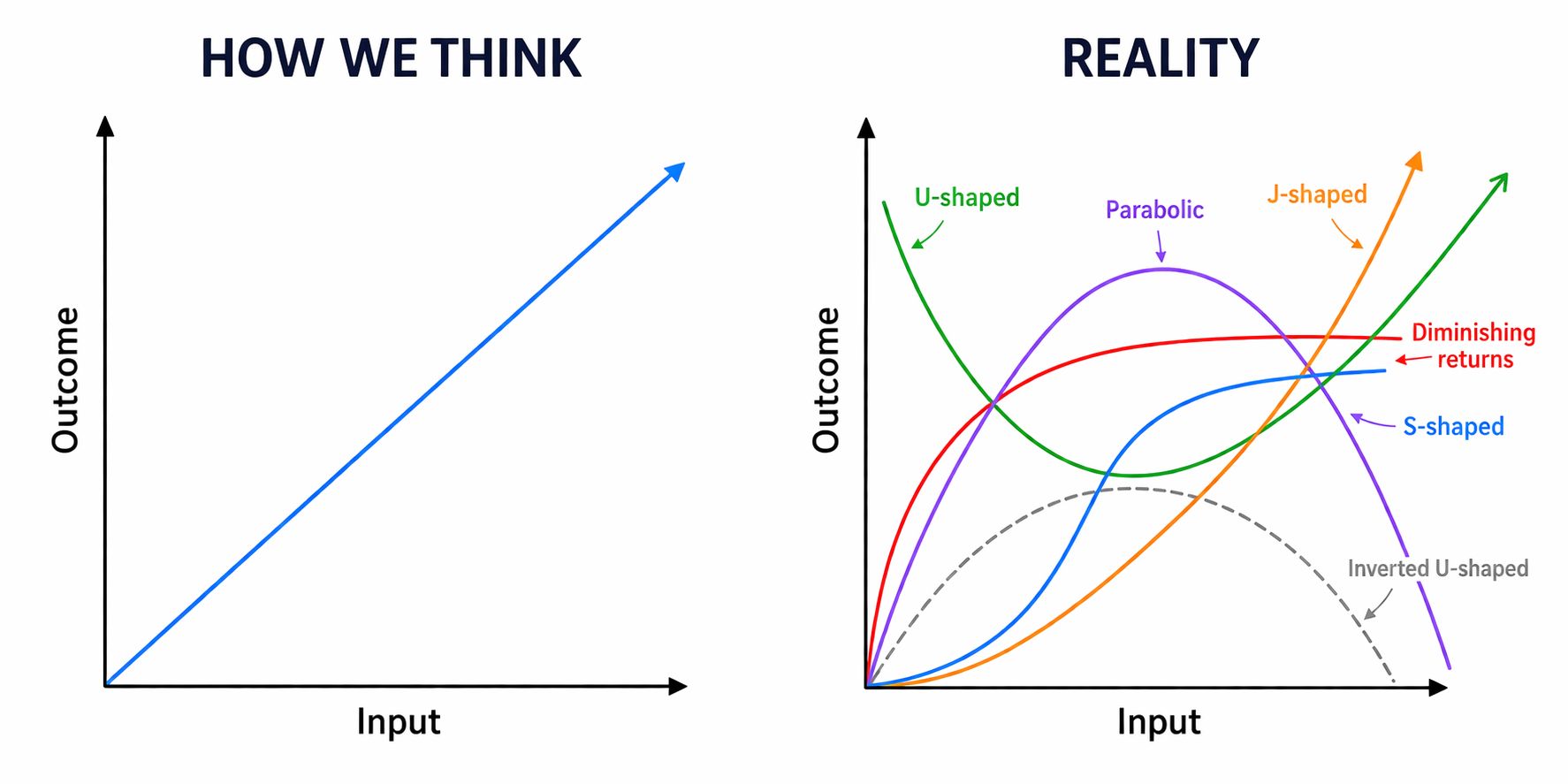
Linear thinking is often our default model of thought. But it’s not reality.

In a supplement formulation meeting many years ago, I suggested to a top supplement brand that cyclical dosing for a certain ingredient would follow the science and might be prudent.

They paused. Looked at me, then at each other. And they changed the subject.

Without a word, I learned in an instant that the nutrition business is much different than the nutrition science.


Today, still, wellness solutions are sold with a childish assumption: if some is good, more must be better.

More sun, heat, cold. More magnesium and vitamin D. More water and electrolytes.

On the flip side, if less is good, zero must be great.

Zero sugar. Zero carb. Free from (fill in the blank: _________)

But linear thinking fails for many reasons. Here’s why…

——

First, biology rarely works in straight lines. Too little can hurt you. Enough can help you. Too much can hurt you again. It’s not a straight diagonal line — the outcome as the input increases is parabolic, or some other type of curve.

Second, we are almost never dealing with one variable at a time. We are dealing with many.

More water affects sodium balance. More sodium creates a potassium imbalance. Then we need more water again.

More sun past a certain small amount saturates vitamin D production, while increasing UV exposure and skin cancer risk.

Lower carb intake may help lower blood glucose, but increase fat intake or worsen fiber intake or training output.

More sauna or cold exposure may help at one dose, but reach diminishing returns while piling onto the stresses of everyday life.

That’s what bad health advice leaves out. It treats one input like a lone hero.

Or worse — ‘stacks’ them to no benefit.

—-

Let’s take an example — that ‘everyone’ should supplement magnesium.

There’s some truth in that claim. Magnesium is essential, and some people don’t get enough and benefit from supplementing it.

But that’s not the same as saying everyone needs to take a well-absorbed form of magnesium every day.

And this is where science and sales split.

The science question is: Who actually needs magnesium, in what form, at what dose, for what reason, and for how long?

While the sales question is: How do we turn magnesium into a daily habit for as many people as possible?

—-

Linear thinking for supplements is profitable. Take it every day and keep going, and don’t ever cancel your subscription, because, well… profit margins.

But the science says: The dose-response for magnesium is not a straight line. Magnesium is not a drug. We’re already getting some from our food. Feedback inhibition maintains equilibrium — that’s the ‘expensive pee’ argument.

So the science says cycling or skipping a day or a week occasionally make more sense than the daily status quo.

Yet as many of us are aware, what’s good for science is often bad for business.

This gap in between explains much of where the health and wellness industry misses our mark.

Home » Archives for April 2026

Food Science is Not Broken

by NaturPro in Uncategorized Comments: 0

Food science is not broken. But people keep treating it like it is finished.

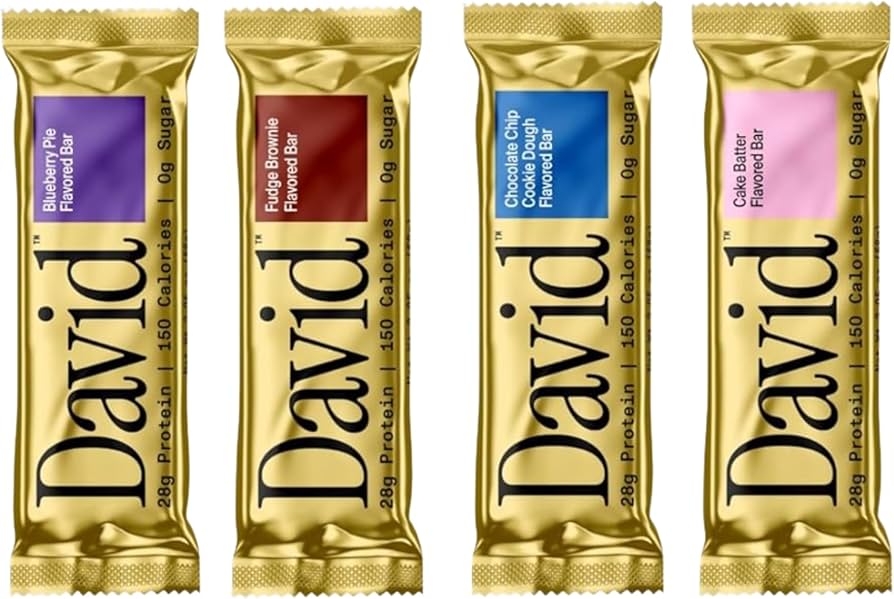
I was quoted this week on the David bar lawsuit, and the bigger issue is not just a protein bar. It is partly about how badly people want to call a single scientific method a gold standard, when it might just be an old standard.

Science advances, and so should humans.

—–

AOAC 945.44, titled “Fat (Crude) in Food — Acid Hydrolysis Method” is a gravimetric method. You add acid to the sample, then you extract the fat with a nonpolar solvent and weigh the result. Sounds easy, right?

Wrong. If a fat in a food is bound by protein, it might not get extracted and the result underestimates. If the food has naturally occurring waxes, sterols or other non-fat hydrophobic substances, it falsely counts those as fat and overestimates. The results all depend on the matrix – or the specific composition of what’s being tested.

The crude fat method was also developed for an earlier era of food, before ingredients and products that defied the limits of older assumptions. It doesn’t make AOAC 945.44 worthless — it just means it’s not automatically the right method for every sample.

Same with running bomb calorimetry for calories. It’s just the old standard, not the gold standard.

David Bar food testing lawsuit based on gold standard, not old standard

Today, we’ve got more specific methods that blow gravimetry and calorimetry out of the water in terms of accuracy and precision. But the lab will run whatever test you order – so you have to order wisely.

We can still run the old method to see how its results compare to the new methods. But don’t jam everything imaginable through the old methods and expect to have perfect results.

This is is how science is supposed to work. It advances, refines and updates when old tools prove insufficient. So today, we’ve got better tools to measure fat and calories — compositional analysis, ingredient-specific metabolic data, and FDA-compliant flexibility to the science — all allowed under 21 CFR 101.9.

Wilbur O. Atwater would be proud of where we are. And I’m guessing that would probably shame anyone who oversimplifies his 4-4-9 and picks gravimetry over the tools we have at our disposal today to get a splashy, cheap and fast answer.

Food science is like every other scientific discipline. It keeps moving.

The question is not whether an old method was once respected and most commonly used. It is whether it is still the right one now, fit for purpose to the matrix.

Article in Nutritional Outlook: https://www.nutritionaloutlook.com/view/david-protein-faces-class-action-over-caloric-and-fat-labeling-accuracy

Home » Archives for April 2026